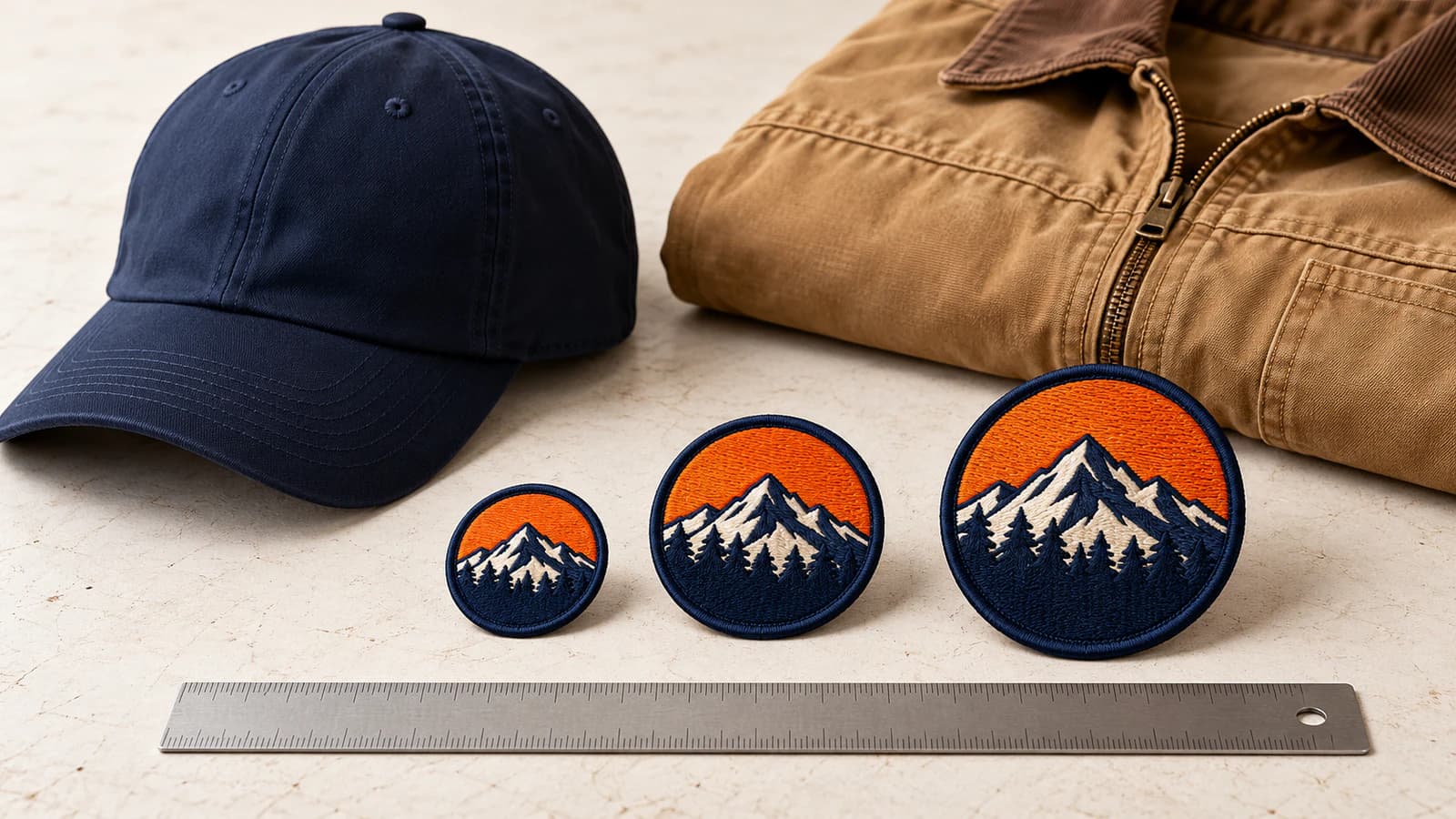
Illustrative sample design demonstrating relative scale and construction details.
Physical Dimensions vs Quoting Conventions
Physical patch size is measured as Width × Height (for example, 3.0" wide by 2.0" high). While some quoting formulas reference an average size [(Width + Height) / 2] to estimate pricing tiers, placement on your apparel depends strictly on physical height and width.
Standard Size Proportions & Placement
A 2.0" (50.8 mm) patch suits compact sleeve hits, beanies, or collar placement.
A 3.0" (76.2 mm) patch is a versatile size for company shirts, vests, and mid-profile caps.
A 4.0" (101.6 mm) patch provides bold visibility on jacket chest panels and gear bags.
Cap Panel Placement & Constraints
Caps vary widely in panel shape, crown height, and seam structure. A 4.0" patch will frequently exceed usable front panel space on standard caps.
Always measure the actual usable panel space of your specific cap or garment before selecting patch dimensions.
Artwork Detail vs Scale
Small patches require bold, simplified artwork. Fine lettering or complex emblems often require larger physical dimensions or woven construction.
Legibility depends on your artwork complexity, selected medium, and confirmed digital proof.
Illustrative Visuals & Quote Verification
Diagrams show illustrative relative proportions rather than literal screen size. Orders start at 10 pieces and include a free digital proof. USA shipping available; confirm costs in your quote.
Find your patch size
Compare 2, 3 and 4 inch round patch diameters on the same garment photo.
Check chest seams, the button placket and usable fabric before choosing your finished patch dimensions.
Photo mockups are styling references, not exact-to-scale measurements or guaranteed garment fit. Confirm your own garment measurements and digital proof before production.